Pool Heat Pumps on the Sunshine Coast: Extend Your Swimming Season Cost‑Effectively
Practical guidance for Sunshine Coast homeowners on how pool heat pumps work in the local climate, how to choose the right size, ways to lower running costs, and how heat pumps compare with solar‑only heating.

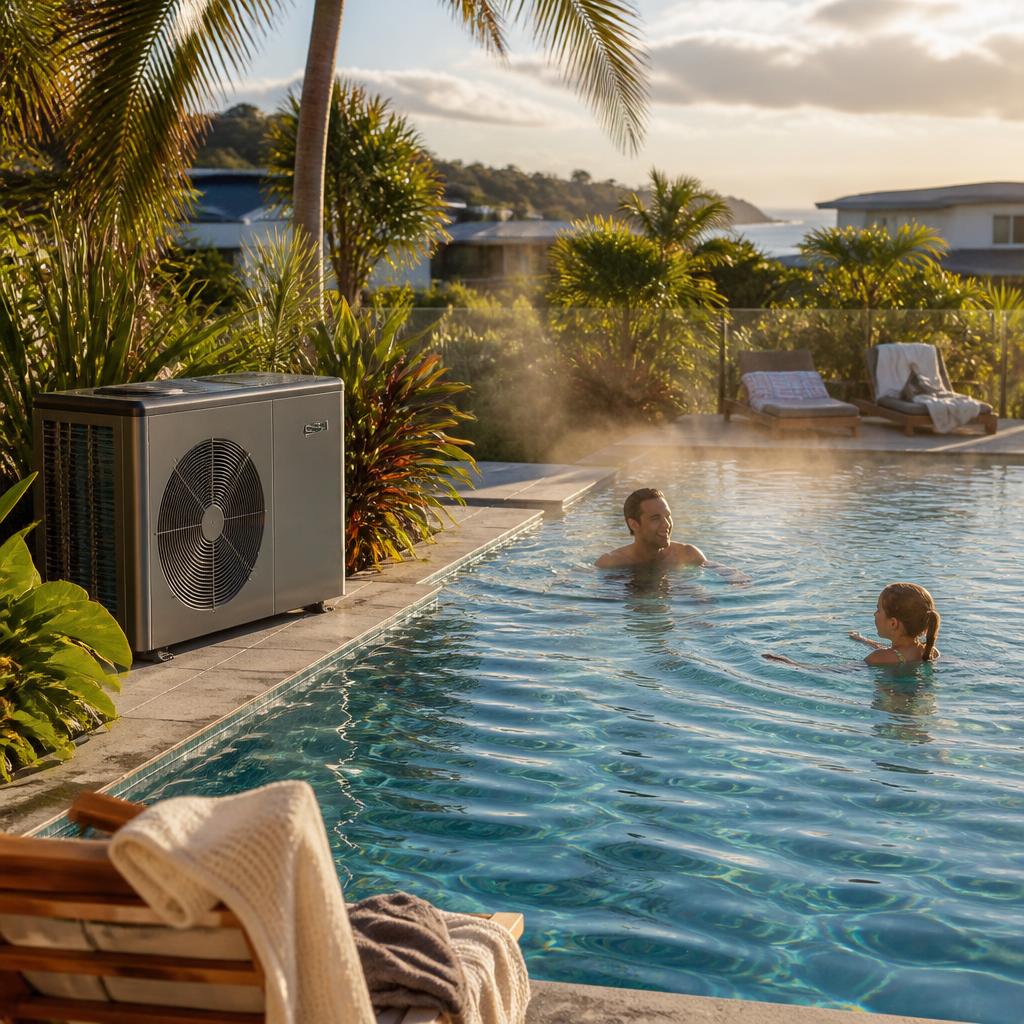
Why a pool heat pump makes sense on the Sunshine Coast
The Sunshine Coast’s subtropical climate gives us warm summers and cooler, milder winters — perfect for extending the swimming season without major expense. A pool heat pump extracts heat from the air and transfers it to your pool water, providing steady, controllable heating even on cooler days. For families in suburbs like Peregian Beach, Pelican Waters and Noosa Heads, this means more comfortable swimming months and fewer sudden cold days that stop guests or kids from using the pool.
How pool heat pumps work — in plain terms
Unlike gas heaters that generate heat or solar panels that rely on direct sun, heat pumps move existing heat from outside air into the pool via a refrigerant cycle and a heat exchanger. This process is energy efficient because it uses electricity mainly to run the compressor and fan rather than to create heat. In practice that translates to reliable temperature control and consistent results on breezy or overcast autumn and spring days common along the coast.
Choosing the right size for your backyard pool
Proper sizing is about matching the heat pump’s output to your pool’s volume and your desired temperature. Key factors installers consider are pool size, typical overnight temperature, how much you want to raise or maintain the water temperature, wind exposure, and whether you use a pool cover. Rather than rely on generic formulas, ask a qualified installer to assess your pool — they can recommend a model that balances performance and running cost for your specific backyard.
Reducing running costs: practical tips
You don’t need to run a heat pump 24/7 to get good results. To keep costs down: use a well‑fitting pool cover to cut heat loss, run the heat pump during the warmest part of the day or during off‑peak electricity rates, set a reasonable thermostat rather than overheating the pool, and maintain clear airflow around the outdoor unit. Regular servicing and cleaning of coils and filters keeps the unit efficient; neglecting maintenance is a common cause of higher running bills.
Heat pump vs solar‑only heating: pros and cons
Solar systems are low to no running cost on sunny days, and they work well here during long, sunny periods. However, they depend on adequate roof space, correct orientation and strong sunlight, and their output drops on cloudy or cooler days. Heat pumps provide more predictable year‑round performance and faster recovery after heavy use, but they have ongoing electricity costs and perform best with a pool cover. Many homeowners choose a hybrid approach — a heat pump supported by solar panels or a cover — to balance reliability and operating cost.
Installation and ongoing care: what to expect locally
A professional installation includes correct siting of the outdoor unit for airflow, proper pipework and mounting, and ensuring electrical connections meet local regulations. After installation, planned maintenance — checking refrigerant, cleaning coils, and inspecting controls — keeps the system efficient. Sunstate Climate Control offers installation and servicing across the Sunshine Coast and is experienced with both residential pool heaters and ongoing maintenance. As one recent customer reported, the team responded quickly and had a heat pump working in time for holiday guests, demonstrating prompt communication and practical follow‑through.
Local checklist and next steps for Sunshine Coast homeowners
Before you decide: 1) note your pool volume, whether you use a cover, and how warm you want the water; 2) consider if roof space and orientation suit a solar array; 3) request an on‑site inspection for accurate sizing and a written quote. If you live near Coolum Beach, Maroochydore, Noosa or neighbouring suburbs, choose a local installer who understands our coastal conditions and offers servicing after installation. Sunstate Climate Control provides free, no‑obligation quotes, after‑hours support and scheduled maintenance — useful when you want reliable heating during school holidays or guests’ stays. Contact a local provider to arrange an assessment tailored to your pool and lifestyle.
Customer review


Article by
Sunstate Climate Control
Experience counts for everything! Founders of Sunstate Climate Control have more than 20 years of sales, installation and maintenance experience in all aspects of residential and commercial air conditioning and refrigeration. We are a locally owned and operated family business who takes pride in being the Sunshine Coast's most competitive dealer for both ducted and split system air conditioning. Because we pride ourselves on offering an excellence in all areas of our business, we offer no-obligation free quotes, onsite inspections, fast turnaround times and after-hours services for emergencies.